
Ceiling Fan Installation Mistakes Homeowners Make
Installing or replacing a ceiling fan involves more than attaching a new fixture to the ceiling. Using the wrong electrical box, overlooking structural support, making wiring mistakes, choosing the wrong fan, or ignoring persistent wobbling can lead to problems after installation. Learn the most common ceiling fan installation mistakes Neenah homeowners make and when professional electrical installation is the better choice.

A ceiling fan can make a bedroom more comfortable, improve airflow through a living room, or give an outdated space an easy visual upgrade.
That can also make ceiling fan installation look deceptively simple.
Remove the old fixture, attach the new fan, connect everything, and you're done, right?
Not necessarily.
A ceiling fan is different from a typical light fixture. It has weight, moving components, electrical connections, and mounting requirements that all need to work together. Some of the most important parts of the installation are hidden above the finished fan.
For homeowners considering ceiling fan installation in Neenah, WI, understanding the most common mistakes can help you recognize when an installation needs more than a straightforward fixture swap.
Key Takeaways
- Do not assume an electrical box that supported a light fixture is automatically suitable for a ceiling fan.
- Proper structural support and secure mounting are critical because a fan creates movement and vibration while operating.
- Electrical wiring should match the fan, switching configuration, and existing circuit.
- Fan size, ceiling height, blade clearance, and location affect both comfort and performance.
- Indoor fans should not automatically be used in damp or outdoor locations.
- Persistent wobbling, unusual noises, electrical odors, or unreliable operation should be investigated rather than ignored.
- Replacing an existing fan may be straightforward in some homes, while converting a light fixture to a fan can require additional electrical and structural work.
- If the existing box, wiring, or mounting conditions are uncertain, a residential electrician can evaluate them before installation.
Why Ceiling Fan Installation Is Different From Replacing a Light Fixture
A light fixture and a ceiling fan can occupy the exact same spot while placing very different demands on the installation above them.
A typical ceiling light is stationary.
A ceiling fan has rotating blades, a motor, weight, and ongoing movement.
That distinction matters.
The electrical box and mounting system need to be appropriate for the fan installation, while the wiring needs to support the intended controls and features.
The fan itself also needs to be appropriate for the room.
Brey Electric's lighting services include ceiling fan installation alongside other interior and exterior lighting work, making fans a natural part of professional residential lighting projects.
Expert Insight: The part of a ceiling fan installation you cannot see after the job is finished can be just as important as the fan itself. Before concentrating on blade style or finish, make sure the mounting point, electrical box, and wiring are appropriate for the equipment being installed.
Mistake 1: Assuming the Existing Electrical Box Can Support a Ceiling Fan
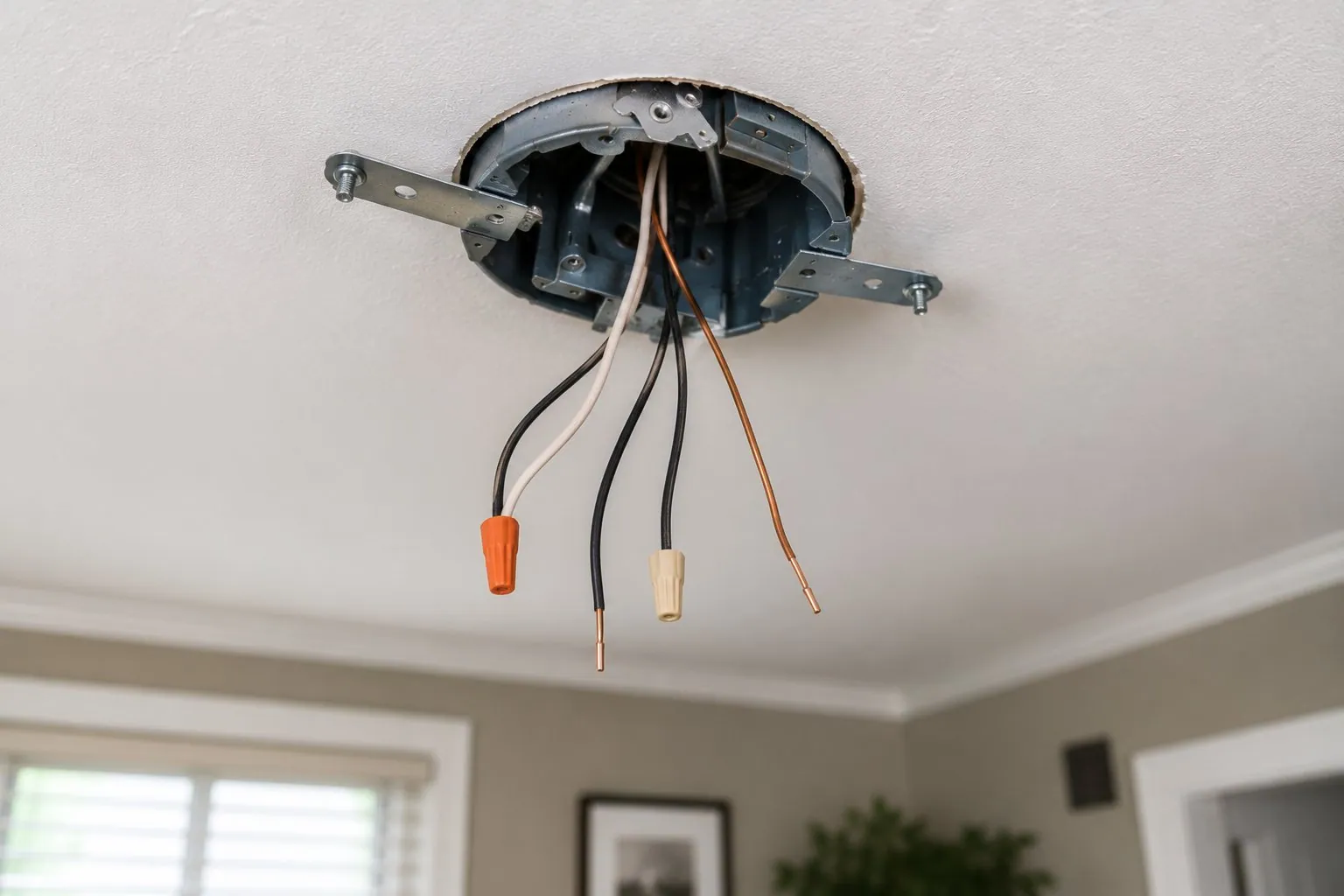
This is one of the biggest mistakes a homeowner can make when replacing a ceiling light with a fan.
An existing ceiling box may have been installed specifically to support a light fixture.
That does not automatically make it appropriate for a ceiling fan.
Fans create additional forces through their weight, rotation, and vibration. The support system must be appropriate for those conditions.
Before a fan is mounted where a light fixture used to be, the existing box and support should be identified and evaluated.
If they are not suitable, the installation may require a fan-rated box and appropriate structural support.
Simply attaching the fan because the mounting holes happen to line up is not enough.
Expert Insight: Never judge ceiling fan support by how sturdy the old light fixture felt. A stationary light and a rotating fan place different demands on the mounting system.
Mistake 2: Overlooking the Structure Above the Ceiling
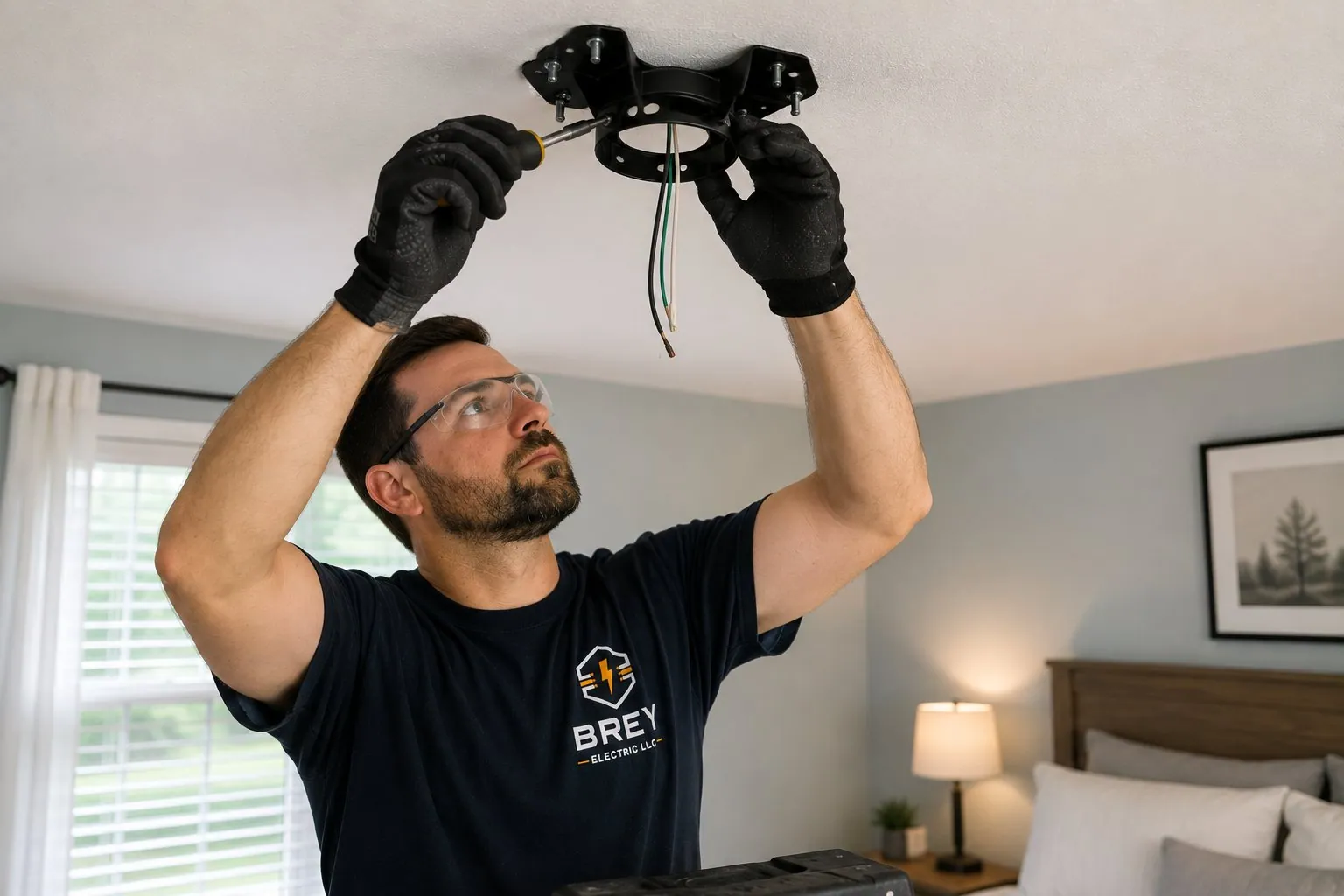
The electrical box is only part of the mounting system.
What supports that box also matters.
Depending on the home's construction and fan location, appropriate mounting can involve ceiling framing or a support system designed for the application.
This becomes particularly important when:
- Converting a light fixture to a fan
- Moving the fan to a new location
- Installing a larger or heavier fan
- Working with an older installation
- Installing on a high or angled ceiling
- The existing box feels loose
- Previous modifications are visible
A finished ceiling can hide these details, which is why the installation should not be based on assumptions about what is behind the drywall.
Mistake 3: Treating Ceiling Fan Wiring Like Every Other Fixture
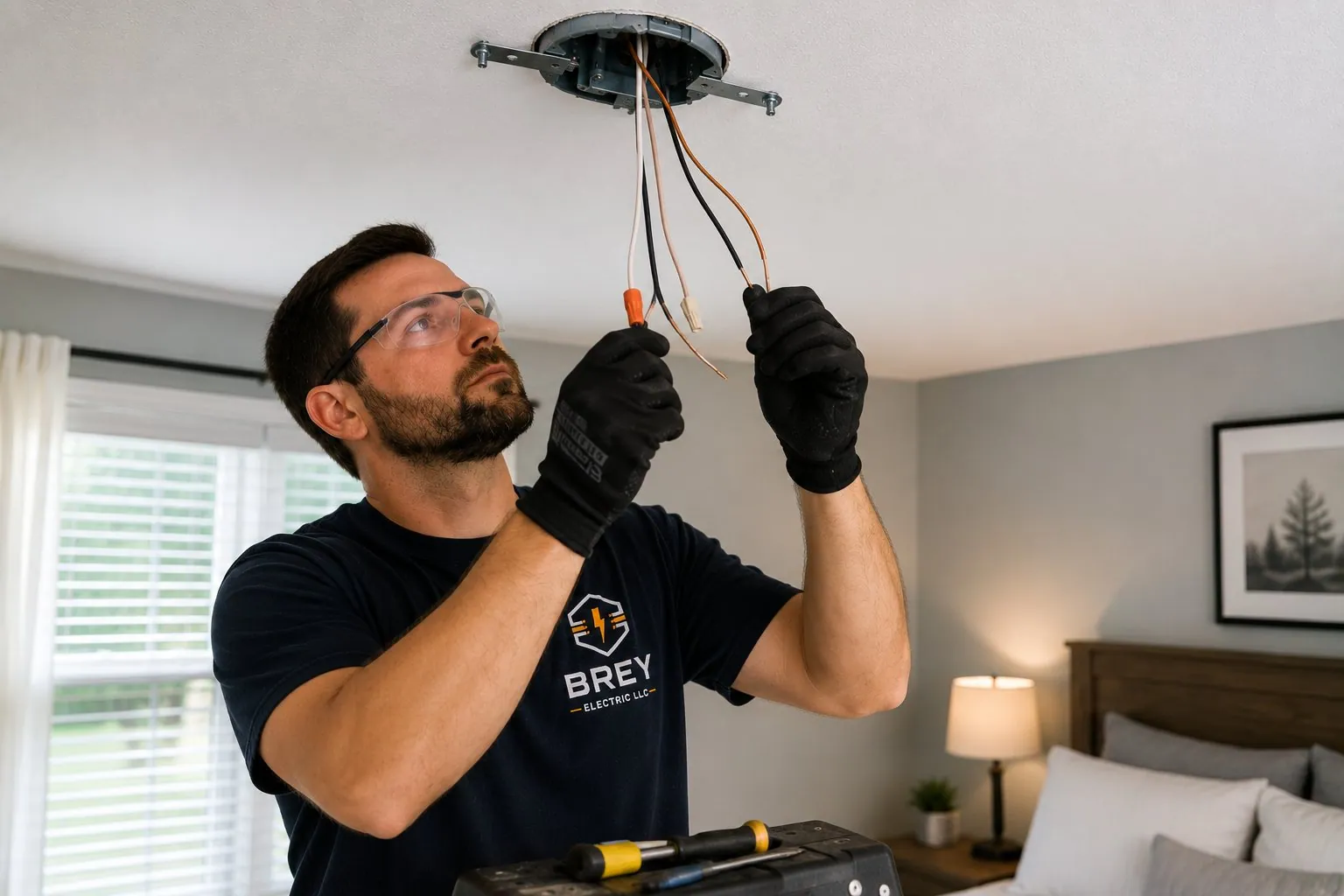
Modern ceiling fans can have different electrical configurations.
Depending on the model, controls, and existing wiring, a fan may include:
- Fan motor controls
- Integrated lighting
- Wall controls
- Remote-control receivers
- Smart controls
- Multiple operating functions
That makes ceiling fan wiring more than a matter of matching wires based solely on appearance.
The existing circuit and switching arrangement need to be understood, and the fan needs to be installed according to its listed instructions and the electrical conditions at the home.
Improper electrical connections can result in:
- A fan that does not operate
- A light kit that behaves incorrectly
- Switches that no longer work as intended
- Intermittent operation
- Tripped breakers
- Damaged equipment
- Electrical safety concerns
If you do not understand the existing wiring or encounter unexpected conductors, stop rather than experimenting.
Mistake 4: Assuming Power Is Off Without Proper Verification
Turning off a wall switch is not the same as establishing that the electrical conductors at the ceiling are de-energized.
A ceiling box may contain wiring serving more than the obvious fixture or may be configured differently than expected.
That is one reason electrical work should never be approached casually.
If there is uncertainty about the circuit or wiring configuration, contact a qualified electrician rather than relying on assumptions.
For homeowners researching what electrical work they can perform themselves, Brey Electric also maintains Wisconsin-focused guidance noting that local codes and required permits still apply even where homeowners may legally perform certain work on their own primary residence.
Mistake 5: Choosing the Wrong Fan for the Room
Bigger is not automatically better.
A ceiling fan should fit the room and installation location.
A fan that is poorly matched to the space can:
- Feel visually oversized
- Provide disappointing airflow
- Create uncomfortable air movement
- Have clearance problems
- Hang too low
- Interfere with nearby architectural features
Consider factors such as:
- Room dimensions
- Ceiling height
- Fan diameter
- Downrod configuration
- Furniture layout
- Blade clearance
- Intended use of the room
A large living room and a compact bedroom do not necessarily need the same fan.
The goal is not simply to fit a fan on the ceiling. It is to choose equipment that works appropriately in the space.
Mistake 6: Ignoring Ceiling Height
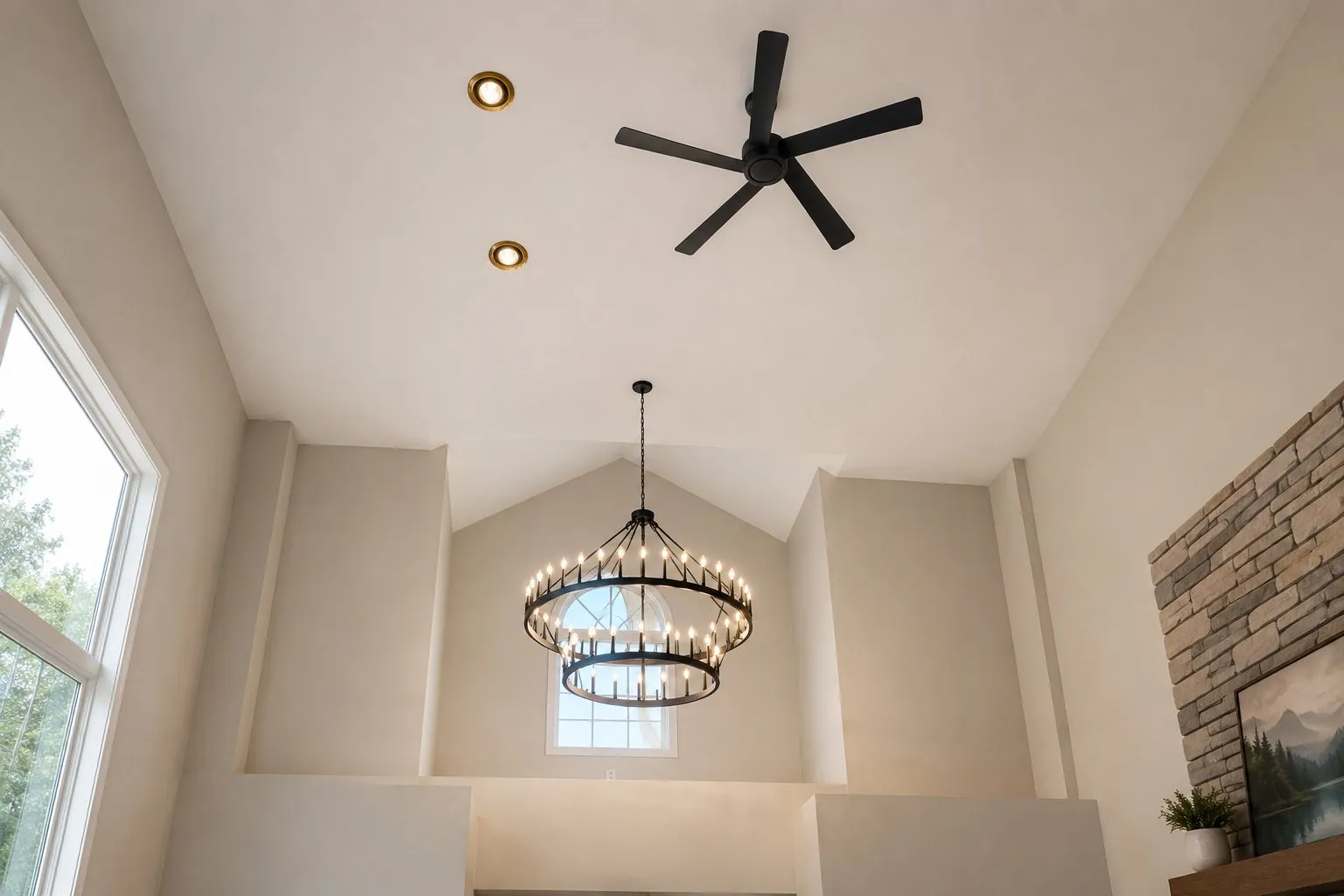
Ceiling height affects how a fan should be mounted.
A room with a relatively low ceiling may call for a different fan configuration than a room with a tall or vaulted ceiling.
This becomes even more important in spaces such as:
- Great rooms
- Two-story living rooms
- Vaulted bedrooms
- Open stair areas
- Tall foyers
High-ceiling installations also introduce practical access and safety considerations.
Brey Electric's current customer feedback includes a documented ceiling fan replacement performed on a 20-foot-high ceiling, illustrating the kind of installation where professional equipment and experience can make a significant difference.
If reaching the fan safely already requires specialized access equipment, that alone can change whether a homeowner should attempt the project.
Mistake 7: Using an Indoor Fan in a Damp or Outdoor Location
A covered porch and an indoor living room may look similar from the perspective of where a fan hangs.
The environment is not the same.
Fans intended for indoor dry locations should not simply be installed wherever you want airflow.
Moisture exposure can occur in areas such as:
- Covered porches
- Patios
- Three-season rooms
- Other damp environments
Use equipment listed for the conditions where it will operate.
The manufacturer's installation instructions and product rating should be checked before installation.
Expert Insight: Appearance is not a reliable way to determine whether a ceiling fan belongs outdoors. Two nearly identical-looking fans can be designed for different environmental conditions.
Mistake 8: Ignoring a Wobbling Fan
Some homeowners assume wobbling is simply what ceiling fans do.
Persistent or significant wobbling deserves attention.
Possible causes can include:
- Improper assembly
- Loose components
- Blade problems
- Mounting issues
- Alignment problems
- Other installation concerns
Do not immediately assume balancing the blades will solve every wobble.
If the mounting system itself is loose or inappropriate, treating only the visible movement does not address the underlying problem.
A newly installed fan that moves excessively should be checked before it is simply accepted as normal.
Mistake 9: Failing to Tighten and Assemble Components Correctly
Ceiling fans contain numerous mechanical components.
The exact design varies by manufacturer, but installation can involve:
- Mounting hardware
- Motor housing
- Downrod components
- Blade arms
- Fan blades
- Light kits
- Decorative covers
- Control components
Missing hardware, incorrectly positioned parts, or loose connections can create noise and movement after installation.
Follow the manufacturer's instructions for the specific model rather than relying on how another fan was assembled.
Different fans can use different mounting and assembly systems.
Mistake 10: Assuming Every Ceiling Fan Replacement Is a Simple Swap
If you already have a properly installed ceiling fan and are replacing it with a comparable model, the project may be relatively straightforward.
But that cannot be assumed until the existing installation is evaluated.
A ceiling fan replacement can reveal:
- An unsuitable electrical box
- Loose mounting
- Questionable previous wiring
- Damaged components
- An unusual switch configuration
- Older electrical work
- Improvised previous repairs
Removing the old fan may be the first time these conditions become visible.
Do not copy a questionable previous installation simply because "that's how the old fan was connected."
The goal should be a correct new installation, not a recreation of an old mistake.
Mistake 11: Ignoring Electrical Warning Signs
A fan that does not operate properly may be more than an inconvenience.
Stop using the fan and seek professional evaluation if you notice symptoms such as:
- Burning odors
- Smoke
- Sparking
- Crackling or buzzing from electrical connections
- Repeated breaker trips
- Switches becoming unusually warm
- Intermittent electrical operation
- Visible damage
These symptoms should not be solved by repeatedly operating the fan to "see if it gets better."
Brey Electric provides electrical troubleshooting and repair in addition to lighting installation, which is useful when a fan problem turns out to involve the circuit, switch, wiring, or another electrical component rather than the fan alone.
Need Ceiling Fan Installation in Neenah, WI?
Replacing a fan, converting an existing light fixture, or adding a fan to a room that never had one?
Brey Electric can evaluate the existing electrical box, support, wiring, controls, and installation location before completing the project.
Professional installation is particularly useful when the existing conditions are uncertain, the ceiling is difficult to access, new wiring is required, or the fan is being added as part of a larger lighting or remodeling project.
Mistake 12: Forgetting About the Wall Controls
The fan itself is only part of how the finished installation functions.
Homeowners may want:
- Fan speed control
- Separate lighting control
- Remote operation
- Smart controls
- Existing wall-switch integration
The desired controls should be considered before installation because the existing wiring and fan design can affect what options are practical.
This is especially relevant when replacing an older fan with a newer model that operates differently.
Think about how you want to use the fan before the installation is complete, not after.
Mistake 13: Installing the Fan Before Thinking About the Entire Lighting Plan
A ceiling fan often includes a light, but that does not mean it should become the room's only lighting source.
Consider how the fan works alongside:
- Recessed lighting
- Lamps
- Task lighting
- Accent lighting
- Natural daylight
- Wall controls
This is particularly useful during renovations.
If a ceiling is already being opened or lighting circuits are being modified, it can be more efficient to consider the fan as part of the complete room design.
Brey Electric's lighting service covers both ceiling fans and broader interior and exterior lighting improvements, making these projects natural to plan together.
Mistake 14: Trying to Work on a Ceiling That's Difficult to Reach
Ladder safety is easy to underestimate.
High ceilings, stairwells, vaulted ceilings, and awkward furniture layouts can turn a seemingly ordinary fan replacement into a difficult access project.
Remember that installing a ceiling fan involves more than reaching the ceiling.
The installer may also need to:
- Remove an existing fixture
- Handle a relatively bulky fan
- Access the electrical box
- Support components during assembly
- Make electrical connections
- Install blades and accessories
- Test the finished equipment
Doing all of that while working at significant height is different from changing a bulb.
If the location requires equipment or working conditions you cannot use safely, hire a professional.
Mistake 15: Not Checking Local Requirements When Electrical Work Changes
Not every ceiling fan project has exactly the same scope.
Replacing existing equipment can be very different from:
- Adding a completely new fan location
- Running a new circuit
- Altering electrical wiring
- Installing new controls
- Performing electrical work during a renovation
The City of Neenah has an Inspections Division and online permitting system for construction and trade work. Its online portal specifically covers electrical work as part of its permitting process.
That does not mean every simple fan replacement automatically requires a permit.
It means homeowners should verify the requirements applicable to their particular project rather than guessing, especially when new electrical work is involved.
Can You Replace a Light Fixture With a Ceiling Fan?
Potentially, but this is where one of the article's most important points comes back into play.
The fact that electricity already exists at the ceiling does not automatically mean the location is ready for a fan.
Before making the conversion, the installation needs to account for:
- Electrical box suitability
- Structural support
- Existing wiring
- Switching and controls
- Fan size and location
- Ceiling height
- Manufacturer requirements
If any of those conditions are uncertain, have the location evaluated first.
Ceiling Fan Replacement vs. New Ceiling Fan Installation
These projects can involve different amounts of work.
Replacing an Existing Ceiling Fan
When a correctly installed fan-rated box, appropriate support, compatible wiring, and suitable controls are already present, replacement may be more straightforward.
The existing installation should still be checked rather than assumed to be correct.
Converting a Light Fixture to a Fan
This may require changes to the electrical box or support because the existing fixture location was not necessarily designed for a fan.
Installing a Fan in a New Location
A completely new fan location may involve:
- New wiring
- New switching
- Structural support
- A new fan-rated box
- Ceiling access
- Other electrical work
This is much more than a fixture replacement.
When Should You Call an Electrician for Ceiling Fan Installation?
Consider calling a professional when:
- You do not know whether the electrical box is fan-rated
- The existing box or fixture feels loose
- New wiring is needed
- The existing wiring is confusing or appears modified
- You want new wall controls
- The fan will be installed in a new location
- The ceiling is high or difficult to access
- You are installing on a vaulted or angled ceiling
- The previous fan had electrical problems
- Breakers trip when the fan operates
- The fan or switch becomes unusually warm
- You smell burning
- You see evidence of damaged wiring
- The installation is part of a larger renovation
A professional can also help determine whether the problem you are experiencing is actually the fan or something elsewhere in the electrical system.
Why Choose Brey Electric for Ceiling Fan Installation in Neenah?
Brey Electric is a licensed and insured electrical contractor based in Neenah that serves residential and commercial customers across Northeast Wisconsin. Its current services include lighting installation, electrical repairs, wiring, panel work, EV chargers, generators, and other residential electrical projects.
Ceiling fans are specifically included in Brey Electric's current lighting services. Its website also emphasizes clear communication, clean work, and completing electrical projects to code.
That makes professional ceiling fan installation particularly useful when a project goes beyond simply assembling a fan and involves existing wiring, structural support, new controls, difficult access, or other electrical changes.
Frequently Asked Questions
Can I replace a ceiling light with a ceiling fan?
Sometimes, but you should not assume the existing electrical box and support are suitable for a fan. The mounting point, electrical box, structural support, wiring, and controls need to be appropriate for the fan being installed.
Does a ceiling fan need a special electrical box?
A ceiling fan should be mounted using equipment and support appropriate for a fan installation. An existing box intended only for a stationary light fixture should not automatically be assumed suitable.
Why does my ceiling fan wobble?
Wobbling can result from blade, assembly, alignment, or mounting issues. Significant or persistent movement should be investigated, particularly if the fan or mounting point appears loose.
Can an electrician replace my ceiling fan?
Yes. Ceiling fan installation and replacement fall naturally within residential electrical and lighting work. Brey Electric specifically lists ceiling fans among the lighting improvements it installs.
Can I install a ceiling fan where there isn't currently a fixture?
It may be possible, but a new location can require wiring, switching, an electrical box, and structural support. This can turn the project into a more involved electrical installation.
Why does my breaker trip when I use my ceiling fan?
A tripping breaker can have several causes, including circuit, wiring, equipment, or electrical fault issues. Stop repeatedly resetting the breaker and have the cause diagnosed if the problem continues.
Should I hire an electrician for a high ceiling fan?
Professional installation is worth considering when the location requires specialized access or makes it difficult to safely handle the fan and perform electrical work. Brey Electric's website currently includes customer feedback about a ceiling fan replacement on a 20-foot ceiling.
Does Neenah require a permit to install a ceiling fan?
Requirements depend on the scope of the project. Neenah maintains an electrical permitting and inspection process, but a simple replacement and a project involving new wiring are not necessarily equivalent. Verify current requirements with the City of Neenah Inspections Division for the specific work being planned.
Schedule Ceiling Fan Installation in Neenah, WI
A ceiling fan should feel solid, operate smoothly, and work naturally with the lighting and controls in your room.
Getting there depends on more than what you see after installation.
The electrical box, structural support, wiring, mounting hardware, fan selection, and controls all matter.
If you're replacing an existing fan, converting a light fixture, installing a fan in a new location, or dealing with a fan that simply does not seem right, have the installation evaluated instead of guessing about what is above the ceiling.
Contact Brey Electric for professional ceiling fan installation in Neenah, WI and get the fan installed with the electrical and mounting details handled correctly.
